Home > SOLUTIONS
Specifying carbon fiber for a structural application involves far more than choosing a product from a catalog. Procurement engineers, composite designers and sourcing managers evaluate multiple interdependent variables — from fiber architecture and resin compatibility through to certification requirements and total landed cost. Understanding these factors helps you ask the right questions before committing to a supplier or material specification.
Carbon fiber composites deliver exceptional performance when specified and sourced correctly. But procurement errors, processing mismatches and supplier quality gaps introduce problems that are often misdiagnosed — blamed on layup technique when the root cause is a material specification issue, or attributed to design when the real problem is batch inconsistency from the supply chain. The following issues represent the most common failure points reported by our customers before working with Zhonglong, together with the approaches that resolve them.

Modern wide-body aircraft use CFRP for over 50 percent of structural weight, spanning fuselage barrels, wing torsion boxes, and control surfaces. Beyond commercial transport, unmanned aerial vehicles, eVTOL platforms, and satellite structures all depend on aerospace carbon fiber composites for weight reduction and dimensional stability. Zhengdan supplies 3K/6K/12K woven carbon fiber fabric, unidirectional prepreg, and pultruded carbon fiber plate across this full range — supported by mill-certified batch documentation for aerospace traceability requirements. Aramid fiber fabric and honeycomb core products complement the carbon fiber range for sandwich construction and impact-sensitive airframe regions.

CFRP body panels, roof modules, chassis reinforcements, and EV battery enclosures deliver 40–60 percent weight savings over steel and aluminum — directly extending EV range and improving ICE fuel economy. Zhengdan supports OEM and aftermarket automotive programs with 3K plain and 2x2 twill woven carbon fiber fabric for visible body panels, unidirectional prepreg and pultruded plate for structural components, and chopped carbon fiber for high-volume SMC and injection-molded parts. Colored carbon fiber fabric in red, blue, silver, and custom colors supports aftermarket performance tuning and premium brand differentiation.

CFRP structural strengthening extends the service life of aging bridges, buildings, parking structures, and industrial assets by decades — at a fraction of replacement cost. Unidirectional carbon fiber wrap for flexural reinforcement, bidirectional fabric for shear strengthening, and pultruded carbon fiber plate for externally bonded or near-surface mounted applications meet ACI 440.2R and fib Bulletin 14 design requirements. Zhengdan's established customer base in Turkey, Southeast Asia, and South Korea supports seismic retrofit programs, while complementary aramid fiber fabric enables blast-resistant and impact-tolerant strengthening systems for critical infrastructure.

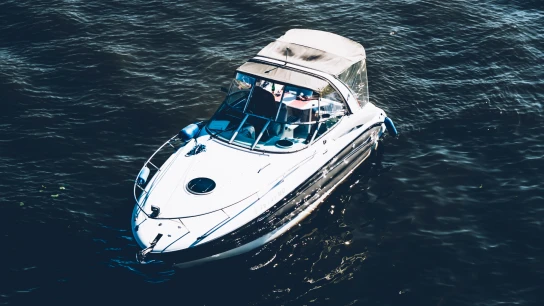
Marine carbon fiber composites deliver corrosion immunity, fatigue resistance, and specific stiffness that no metallic material matches. Applications span racing yacht hulls and masts, luxury superyacht interiors, performance powerboats, kayaks, stand-up paddleboards, and surfboards. Zhengdan's long-standing supply relationships with surfboard, kayak, and boat manufacturers underpin a complete product offering: woven carbon fiber fabric, unidirectional prepreg, pultruded plate, Nomex aramid honeycomb core, and honeycomb paper core for sandwich construction. Aramid fiber fabric supports impact-tolerant regions such as hull slam zones and rigging anchor points.

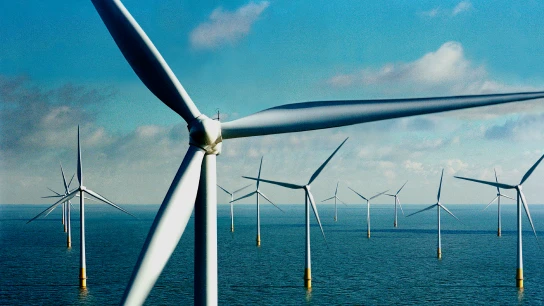
Wind turbine blades exceeding 100 m in length depend on pultruded carbon fiber spar caps to meet stiffness, fatigue, and weight requirements that glass fiber alone cannot achieve. Offshore turbines in the 15–20 MW class, with rotor diameters above 240 m, cannot be built without extensive carbon fiber content. Zhengdan operates four carbon fiber plate extrusion lines producing pultruded profiles for spar cap programs, alongside unidirectional and woven fabrics for blade root buildups, shear webs, and trailing edge reinforcement. Chopped carbon fiber supports nacelle and spinner injection-molded components.

Product name
Product name
Product name
Product name
Product name
Product name
MOQ starts from 50 metres for most standard fabric weights and weave patterns. Custom specifications — non-standard width, hybrid weaves, or specific areal weight — may require a higher MOQ depending on the production run. Trial sample rolls are available before bulk commitment.
Yes. Every shipment includes a batch material test report covering tensile strength, elongation at break and measured areal weight. SGS third-party inspection is available on request for orders where import regulations or customer QA requirements specify it.
Standard in-stock items ship within 3–5 business days. Custom specifications — non-standard fabric width, custom plate thickness, or hybrid constructions — require 15–25 business days depending on volume. Contact us with your timeline and we will confirm availability before order placement.
Yes. Zhonglong supplies the full range: carbon fiber fabric (3K, 12K, 49S), carbon fiber plates and yarn, para-aramid woven fabric, Nomex honeycomb core, and pre-woven carbon-aramid hybrid fabrics for applications that require both stiffness and impact resistance in the same laminate.
We ship EXW, FOB Ningbo / Shanghai, and CIF to major ports worldwide. DDP is available for select destinations. Our export team handles full documentation including commercial invoices, packing lists, certificates of origin and HS code verification — reducing customs risk on your end.